Solo video·January 9, 2025·16 min
How I built a $34M business at 34 on Youtube
TopicsCreator economy and personal brandLeadership and mindset
In this episode
Marina Mogilko reflects on 10 years of building a $34 million creator business across three YouTube channels, Instagram, and TikTok, sharing the mindset shifts and strategic decisions that drove her growth. She outlines five key lessons learned, including following passion over trends, delegating weaknesses, and managing burnout. The episode is aimed at aspiring creators and entrepreneurs looking to build sustainable careers in the creator economy.
Key takeaways
- Lesson 1: Build content around your passion — Marina's first video was about the GMAT, not a trending topic, and passion is what sustains 1,000+ videos over time.
- Lesson 2: Ask yourself daily 'Am I applying my skills where I get the highest returns?' — delegating tasks like video editing freed Marina to focus on ideation, on-camera work, and team building.
- Lesson 3: Burnout is real — Marina nearly quit YouTube in 2023 and had to take a 2-month break before her creativity returned, proving rest is a business strategy.
- Lesson 4: Abundance mindset over scarcity — shifting from 'others will steal my audience' to 'there is enough attention for everyone' directly correlated with Marina's income growth.
- Lesson 5: Iterate fast by creating as much content as possible — volume accelerates learning, and doing tasks you hate makes persistence and consistency impossible.
Chapters
Transcript
Marina Mogilko: Over the past 10 years, I've created 1,215 long form videos across three YouTube channels, built a strong presence on Instagram and TikTok, launched both online and offline products, and grown an amazing team of producers, editors, and managers all working together to turn my passion into a $34 million business.
In this video, I'm going to walk you through my journey of building a successful Creator business. I'm going to tell you where the 34 million comes from and how it was calculated, and I'll share five key things I've learned along the way so you can build a media empire and build a business utilizing this amazing algorithm that provides you free traffic, free leads, everything free if you make the right content.
My mindset is there is enough attention for everyone. One of the things that I learned along the way is that mindset is everything. When I was just starting my journey, I had this mindset like, "I'm not going to share any tips or tricks about YouTube because they're going to take away my viewership. We're competing with everyone." A lot of my income growth actually happened from changing my mindset to, "There's enough attention for everyone. There's so much money in the world." I want you to utilize the same mindset because only with this mindset can you go ahead and start sharing the knowledge, start sharing messages that you want to spread, because this is how you build your own career in the Creator economy.
My first video was about GMAT. That video idea didn't come from analyzing the market. It didn't come from trying to calculate where the highest CPMs are. It came from my passion, and that's lesson number one: you need to build a business and create content around your passion because that's the only thing that's going to work.
Growing a personal brand online is a long-term project. You wouldn't be able to make over a thousand videos just because you're following all the trends. I know TikTok is an app that was built on following trends, but unfortunately that path is not sustainable. You should create content about things that really light a fire in your eye, and those things can change. A lot of people are like, "Oh, if I start talking about this now and I lose my passion two months later, then I'll have to abandon my Creator career." I started talking about GMAT, and throughout my career I did so many things: car reviews, fashion, dance, singing. I tried so many things, and that's okay.
Now let's talk about something that can help you build your own brand or business. When I first started creating content and building businesses, launching a professional website felt like a huge time-consuming task. We had to hire an agency, hire someone to manage the whole website. I had to write all the text myself, source designs. I remember taking Louis Vuitton's website as inspiration. But in 2025, you can skip the stress and technical headaches entirely.
Lesson number two is really asking yourself every single day before you do every single task: "Is this my strength?" What I have now is a note with my to-do list that ends with a phrase that says, "Are you applying your skills where you get the highest returns?" Ask this every time you're starting something. You're about to clean your house—are you applying your skills where you get the highest returns? So maybe it's time to delegate this or not even do it. Sometimes we're like, "Oh, I need to clean my house instead of working," but do you really?
When it comes to content creation, as you develop your channel, pay attention to aspects of video creation that you enjoy the most and which ones you find least interesting. For example, editing was always my least favorite part. I know there are creators who say, "Oh, I have to edit everything myself," but that's not me. Understanding what's you and what's not you is crucial. I spent hours learning how to edit and improve my videos, but eventually I realized that it wasn't where my strengths were, so I just hired an editor. This saved me time and allowed me to focus on my strengths: being in front of the camera, generating ideas, creating products, and hiring a team.
The lesson is there are so many people around you who would say, "Oh no, you have to do this. Oh no, you have to do that." But by asking yourself, "Am I applying my skills to where my strengths are? Am I spending time on what brings me the most value?"—once you start asking yourself this question, it's going to become easier and easier for you to delegate more things or even to give up some things.
It's so important to create as much content as possible, whether you're growing or just starting out, because this is how you iterate your ideas quicker. You have to be persistent, and if you're doing things that you're not enjoying, you can't be persistent. You're just going to burn out.
Let's talk about burnout. I'm a workaholic. When people talked about burnout, I was like, "You guys are just lazy," until I experienced a burnout in 2023. I thought I was going to end my YouTube career. I was so tired of making videos. The only thing I could do was to take a break. First, I took a break from making shorts. Then I took a break from making videos at all for two months, and it was the only way for me to come back and bring my creativity back.
The same happens in my business. In my business journey, I'm always like, "Oh, I don't want to do this anymore. I need to stop right now." There's always the risk of burnout, boredom, and stagnation. Because our career as creators depends on our creativity, which is the first thing to dive. For example, if you're tired of some topic and you no longer want to create content about it, but people see you as the person who was talking about that—go ahead and do something else. Find a format within your topic that's exciting.
For example, I've been talking about English on my channel for over ten years now. I'm not an English teacher. I don't want to do those videos teaching people tenses or explaining complex grammar topics. But I love talking about brand name pronunciation. I love talking about American accents, and these things evolve with me. It's okay to outgrow the topics you started with. Over time, you might feel like you're no longer excited by the content you're creating, and that's a part of the natural process.
I started my Marina Mogilko Channel, which is a Russian vlogging channel with videos on English exams. I started filming vlogs, then I realized English had to be a separate topic, so I started another channel. But then I became interested in investment. Every time I started something new, people were like, "Oh, you want to be everywhere. YouTube, please stop recommending her." But in retrospect, I realized I gained so many new followers, met amazing friends, and got so many opportunities because I was able to follow my passion. When my passion changed, I followed another passion, and that's totally fine.
That's actually one of the key learnings of 2024: if you want to start a new project which is not based on your current strengths and skills, it is fine. Go ahead and start it. You don't have to force yourself to stay in the cage of your skills.
Most of the time, because we really seek genuine people online, this creativity and curiosity is going to lead you forward. My curiosity about different topics led me to creating two more channels: Right Lingo Marina and this channel, Silicon Valley Girl, which is my best performing channel in terms of the people I meet, in terms of brands I get to work with, in terms of the opportunities it creates.
And here we are. You're watching this video because I decided that I'm much more than just a girl who immigrated to an English-speaking country and is sharing her journey about learning English.
So basically, you start with a niche, you build your audience, you establish yourself as an expert in one area. But when you're ready to expand, you gradually do it by introducing new topics. As you start growing, keep in mind that you'll need to hire more people. I know for a lot of creators, and people in general, it's so hard to start hiring, but you just have to do it. You just have to make all of the mistakes in the world, go through people leaving your company abruptly.
I had what I think was the most horrible thing that ever happened to me with hiring. I hired a group leader for a group that was supposed to go to Finland—a group of kids. We did all the screenings for her and everything. She was set to go, and six hours before the bus was supposed to depart, she calls me and says, "Hey, I can't go." I had twelve kids who she was supposed to be with. In six hours, I was able to find another group leader who was able to take on more kids, who was pre-screened, had a visa, and everything. But I was ready to go myself. Those things are going to happen, and it's fine. This is how you grow, and it's the way for you to scale and a way to prevent burnout as well because you're going to delegate things that you don't like.
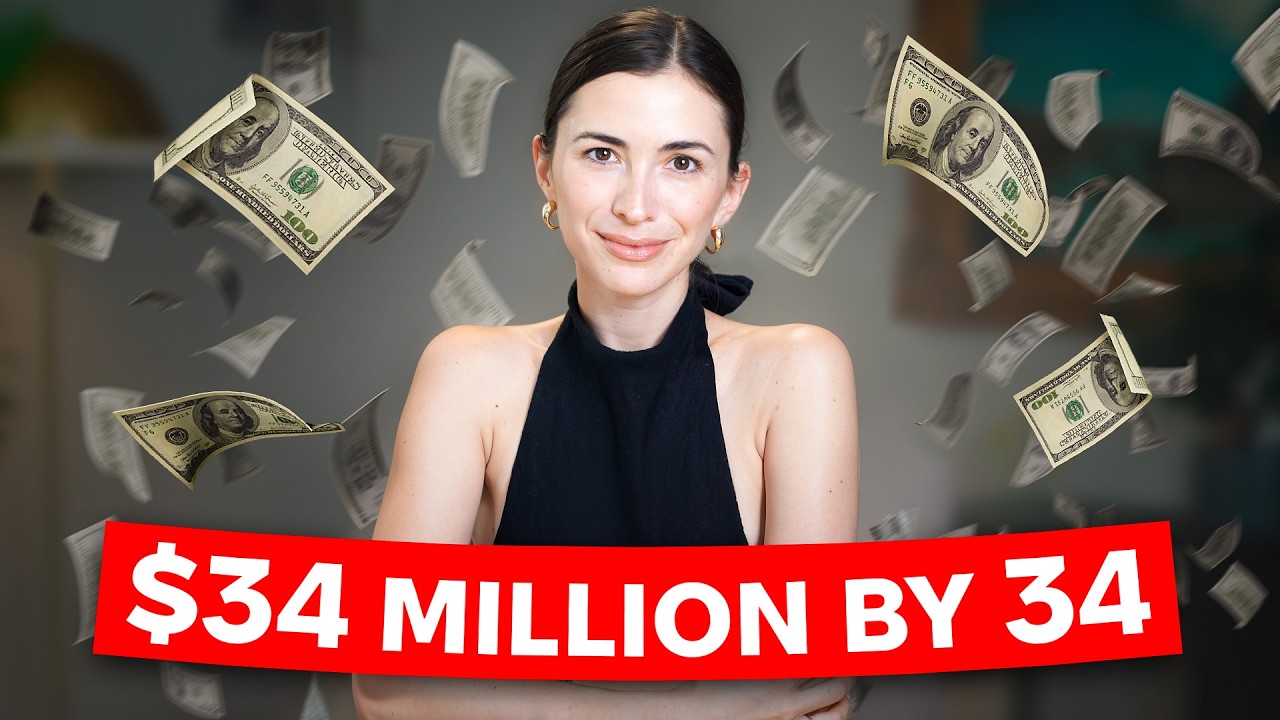
Okay, let's talk about the valuation. Let's talk about the 34 million. It's so exciting, the world that we live in. I became the first creator to raise a venture round. I basically put all of my creativity in an LLC. It sounds a little bit crazy, but anything that's connected with my Creator career is put in an LLC. I sold 5% of that LLC for 1.7 million. So basically, investors own part of my future creativity income.
For me, that means I have freedom to invest. For me, that means I have freedom to start new businesses, and I have a safety net. For me, it's like a cash out because in a typical company, you can cash out during Series A, Series B to buy a house. But in a Creator career, you either take all the cash for yourself, but you want your business to grow, so it gets harder to cash out. For me, this was a cash out.
Because I sold 5% for 1.7 million, the valuation of my creativity was $34 million. Basically, Slow Ventures, my investors, they focus on funding creators instead of funding companies. I know they've raised a much bigger round to invest in creators in 2025. The idea is simple: when you're young and you're a Creator, you have time, you have energy, you have ideas, but you lack the funds to bring them to life. With this model, they provided upfront capital in exchange for a percentage of my income over time. It's basically like borrowing from my future self to invest in my present.
I feel like there are so many opportunities opening up for creators. If you're a creative thinking, "Hey, I want to build a media empire," then there's one thing you need to learn: you need to learn how to build businesses around your media presence. It's not just about making AdSense income. It's not just about making affiliate income. It's about, "Hey, why don't I start my own..." If you're in the finance industry, why don't you start your own creative bank? Why don't you try this? Keep iterating through ideas.
What investors are looking for is your business mindset. You basically need to see yourself as a business. It also helps me psychologically. Sometimes I'm like, "Okay, Marina, you're an artist. You're in front of the camera or an actor, whatever you call yourself. You're also a producer because you need to think about what's going to perform and what's not going to perform. And you're also an entrepreneur. You have to think about scaling yourself. Since you are the main product, you need to find new ways to showcase who you are and what you stand for."
So basically, you are the product of your business. Think about yourself as a product, but also all of the management team around that. That really helps me, especially when things go sour or I get hate online. I'm like, "Okay, Marina the artist, Marina the creator—let's switch you off for a while. Let's talk with Marina the producer. Like, what are we going to do? How do we see our future? What's going to happen in five years?"
I currently have 19 sources of income, and I made a video about it that you can watch. But I truly believe that I'm able to build something that can be worth a billion dollars or more and eventually sell that company. I'm still figuring out exactly what it will look like, but the lesson I've learned is simple: see yourself as a business. If you want to scale your creator career, don't be afraid to seek out investment. Don't be afraid to launch products. Remember that it's all about iterations and trying and testing new ideas.
I met so many founders who tested over ten ideas. Their eleventh or twelfth idea became a billion-dollar company. So you have to be persistent.
The last takeaway for this video is about reinventing yourself. I briefly mentioned following your curiosity and not just solely relying on your results that you already have. Because when you have an income, it's easy to increase it by 20, 30%—you just do more of what you're doing, you find new opportunities. But if you want to grow five times, ten times, you have to come up with something new, and that lies across the border from what you've been doing.
This mindset of constantly changing things, of not sticking to one thing—when it comes to being a public person, you can't be the same. If you're the same for years, people just get bored. You have to reinvent yourself by following your curiosity.
What I do is constantly look at other people, at what they're doing, at what I like about them. I started my career admiring Gary Vee. I still like him, but I don't necessarily follow his strategy because this hustle culture is not applicable to a mom of two small kids. I have new role models now. I guess I have a new role model every year because every year I want to add something to this product Marina.
I'm focusing on singing, acting. I want to add the acting part to myself in 2025. I just hired a vocal coach. I just hired a stylist. I need to add the celebrity part to Marina, and it's a process, and it's exciting, and I'm learning this just by watching others and kind of borrowing things from them.
Change always comes with people disagreeing with you and mocking you for doing things. But as a person who's done that so many times—I remember when I first started talking about investing in 2020, sharing my journey, I got mean comments saying, "Oh, if a person as dumb as Marina can start investing, then it means it's time to exit the market." There's the saying, "If a housewife starts investing, that means the market is peaking and there's a bubble." People told me that. Guess what? Four years later, my portfolio is doing great, and I'm doing great. I started doing that and sharing my knowledge, and I did not give up because of those comments.
These days, I'm more confident in embracing my interests, and my audience is responding positively. The truth is reinvention is one of the best ways to avoid burnout.
So here are the lessons I learned on my journey from creating videos in my bedroom to building a $34 million business across social media. I hope this helps and I hope it's inspiring for you.