Interview·May 13, 2025·36 min
Unacademy Founders: What It Really Takes to Build a $3 Billion Business | Gaurav Munjal & Roman Saini
In this episode
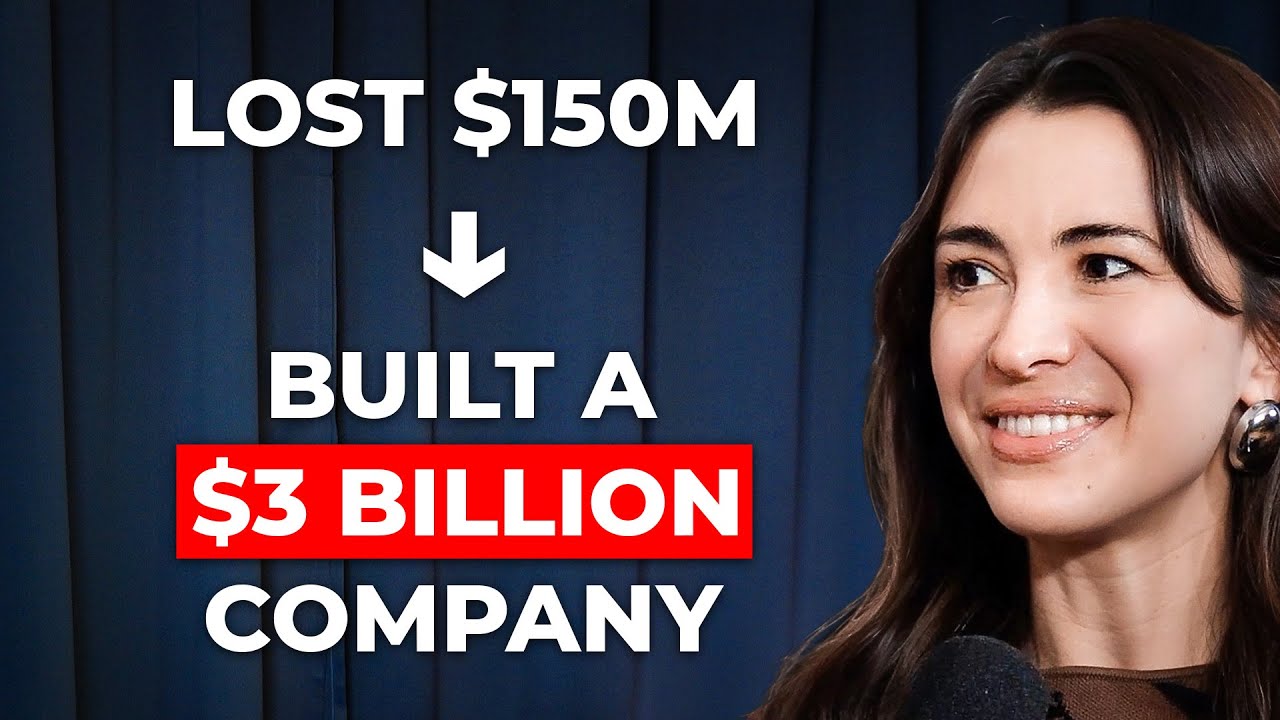
Marina sits down with Gaurav Munjal and Roman Saini, co-founders of Unacademy, to trace how a YouTube channel launched in 2010 grew into a $3 billion edtech unicorn serving millions of students across India. They discuss the brutal realities behind the growth — including losing $150 million per year, mass layoffs, panic attacks, and preparing for an IPO — as well as their AI-powered English learning app Airarn, which reached the top 5 educational apps in the US within months. The conversation covers their YouTube-first content strategy, mental health struggles founders rarely discuss publicly, and their vision for AI's role in education over the next five years.
Key takeaways
- Unacademy started as a YouTube channel in 2010 and scaled to 1,000+ educators before pivoting to a test-prep product now generating $100 million in revenue annually.
- Their AI English learning app Airarn reached the top 5 educational apps in the US within roughly six months, with zero ad spend driving early growth.
- At their peak burn, Unacademy was losing $150 million per year while simultaneously preparing for an IPO targeted within the next two years.
- Roman Saini experienced panic attacks once a month during the company's most difficult period — a candid reminder that mental health struggles are common but rarely discussed among male founders.
- Their core insight for entering the English learning space is that AI can now provide instant, scalable feedback on speaking and writing, removing the need for expensive human evaluators and directly challenging incumbents like Duolingo.
Chapters
- 00:00Teaser
- 00:42From YouTube blog to $3B edtech unicorn
- 02:35Why they focused on YouTube for education
- 06:20How their AI app is disrupting Duolingo in just one year
- 09:20The depressing phase: no sleep and panic attacks
- 10:17How they earned $2M/year with zero ad spend
- 11:35IPO prep while losing $150M/year?
- 13:33Did they consider shutting down?
- 14:19Men don’t talk about it
- 16:02Are they replacing teachers with AI?
- 19:14How they started
- 21:52Decline in viewership when Roman stopped posting; 1000 teachers creating instead
- 22:40Netflix for education: managing 100+ channels
- 23:55How much it costs to run a single YouTube channel
- 25:42Their marketing strategy
- 26:50Why videos now get only 200–300 views
- 28:00Laid off teachers
- 29:27Advice for YouTubes
- 30:12Leave your ego behind: let others do the work too
- 31:35Moving to the U.S.
- 33:50What will happen in 5 years with AI
- 34:50Advice for first-time founders in 2025
Transcript
Marina Mogilko: Started as a YouTube channel and now the largest educational company in India valued at around $3 billion. You had like 1,000 educators creating. Are you replacing some teachers with AI? You should not think that you are the only one who can do it. You're preparing for your IPO, right? And you're still losing money.
Men usually don't talk about it, but 50% of whatever crying has happened in that case. I was having a panic attack once a month. That was quite terrible. We were losing 150 million a year. Have you ever had this conversation like let's just shut down the company. It's not working. You know, we just need a big win also again. Maybe we should build a Duolingo competitor. And it just worked.
Gaurav Munjal and Roman Saini: I think I was in college and Roman and I went to tuition together. It's coaching for examinations in India. Test prep is a big market. So we used to go to this coaching center together and then I went to Mumbai and he went to Delhi. Then I think it was the third year of college where Khan Academy was super big. I was always tweaking around stuff. I started coding when I was 12. I was blogging when I was 17. So my parents got a $200 check from Google AdSense when I was 17. So they thought I'm doing some fraud or something like that. It's been an interesting journey where we have been content creators first and then product people.
Third year of college we launched a channel called Unacademy back in 2010 and started creating content. Then we went on to do other stuff. I started a company that I sold when I was 23, but the channel was always growing. At some point Roman, who was a medical doctor and was the one good in academics—I used to just somehow pass my subjects—he started creating content and those got millions of views. Then we decided that we'll create Unacademy, which is like a YouTube for education. We had seen Twitch was recently acquired by Amazon. So the thesis was that there is unbundling of YouTube happening, and if Twitch can be so valuable, that's how Unacademy started.
Marina Mogilko: So you thought it's going to be like a separate platform just for educational content, not like a test prep?
Gaurav Munjal and Roman Saini: In the beginning that was the idea. We eventually moved to test prep, but the initial thesis was we want to build our own YouTube. I was a computer engineer and he was a medical doctor preparing for UPSC, and we had never thought of teaching. So the thesis was can we get the smartest people to teach online because they will never teach offline—they're too busy with their lives. The way his videos responded, our thesis became can we get more smart people to just teach, and what will happen with time is what happened to entertainment. For every topic, you'll have the top 100 teachers and their videos will be watched by millions of people. It did play out the way we imagined, but the product was different. The product we eventually built does $100 million in revenue for us, which we are going to do an IPO for in the next two years. That's a very different product, but it started like that.
Marina Mogilko: What fascinates me a lot about Unacademy is that you guys started as YouTubers and through discovering your passion on this platform, you also discovered the whole business that is behind standardized tests in India. If you've been watching this channel for a while, you know that I started my journey in the US with actually taking those tests. I took my GMAT, I took my TOEFL, and I applied for MBAs here in the US. I ended up not going to universities though. I got two full ride scholarships to University of Florida and Johns Hopkins.
We also got funding from 500 Startups for a company called Lingua Trip and we decided to focus on the business. If you're looking to prepare for the TOEFL test, I think we built the best app on the market. I'm very biased because I'm the founder, but we basically built this Lingua Trip app that helps you practice as many times as you need and also get feedback on your speaking part. The TOEFL test is writing, speaking, reading, and listening. Previously, you had to pay someone to evaluate your speaking part. But now with the help of AI, you can just do it for many times and get instant feedback.
If you're listening and thinking like I don't really need this test right now, but I really want to improve my English in order to start working on my international dream—as you might hear, I have an accent in English, but it's not really the accent I used to have when I wasn't working on it. We have a teacher named Vania who actually taught me a lot of tips and tricks about American accent, and he just released a new course on pronunciation hacking. If you want to sound like an American and learn tips on how to open your mouth or how to say certain words in a more American way, I highly recommend his course because it's very practical and it's coming from a non-native speaker who sounds just like a native speaker.
Let's continue our conversation with Unacademy. Okay, let's talk about Airarn. First of all, congratulations—number five educational app in the US. I remember we talked about you starting this app. Tell me why English? Why did you go into this niche and why do you think it's different? Like where AI can replace some of the tutors?
Gaurav Munjal and Roman Saini: Again, going back to when we started the company—the company was started because we wanted to do online education, and then post-COVID, because there were headwinds for the core business of the online business, we had to open offline. That's a good business. We have a few CEOs of that business. Our core insight and core motivation is to still make sure that online education changes the world.
We asked ourselves: what is that one category where AI can create a lot of impact? We realized we saw Duolingo. I've been a fan of their product for five to six years. In literally every podcast that I have done in the last five years, I've spoken about Duolingo. I'm a big fan. So at some point I was like maybe we should build a Duolingo competitor because I've used the product so much. I had a 100-plus day streak on Duolingo, but I could not speak the language. It's very good in certain areas, but I knew I'm a product guy. I've been building products since I was 12. So I thought, what if they could tweak this? What if they could tweak that?
We built Airlearn with a lot of tweaks and a different pedagogy. At this point, every third review is like this is better than Duolingo. Duolingo is over-gamified. So if you learn Spanish, it will start with "manzana"—or water is called "agua"—but it would not tell you grammar. It would not tell you the difference between masculine noun or feminine noun, or when to use what. So we said let's try creating a new app without the stuff that we hate about Duolingo, and it just worked.
Our D30 retention is awesome. We've done $2.5 million in six months. We're now at $2.5 million ARR in six months. So it just worked, and at some point we're like this is the next biggest thing that Unacademy can build.
Marina Mogilko: Do you think it's generally a good strategy in entrepreneurship to go and build a competitor to a huge company already?
Gaurav Munjal and Roman Saini: If you are in your 20s, do zero to one because you're not too worried about the risk of failure. But if you see how big industry thinks—they think about big markets like how Reliance would think in India or how big CEOs would think—like why would Mark Zuckerberg launch Threads as a Twitter competitor? Because he knows it works. Why would Jeff Bezos launch Prime Video? Because when you're in your early 20s you want to change the world and you know you want to do zero to one.
I'm not saying zero to one shouldn't be done at later stages, but at some point—and it happened with me—because you have achieved a certain success, the fear of failure becomes high. So the need to do pure zero to one, which will take five years to figure something out, you can do sometimes, but we did that in online education and post-COVID it just tanked to 50% of what it was in COVID. That was a depressing phase for three years. I remember not sleeping without melatonin or having panic attacks.
Zero to one is hard because there were no examples. It was a new product that had seen a journey like COVID for the first time. So it was hard. So I was like, we are very good at executing stuff. I will do zero to one also at some point in my life, but we are great product builders. We are great marketing people. We love great design. So if there is a market in which an incumbent is doing a billion dollars in revenue, can we create a product in that market?
If you would have asked me this question 10 years ago, I would be like I don't care about big markets. I just want to change the world. Now we have seen a lot of ups and downs, especially post-COVID, and it was a very tough phase. We're also like, you know, we just need a big win also again.
Marina Mogilko: And what was the best marketing tool that worked for the past six months for Airlearn?
Gaurav Munjal and Roman Saini: Day one we made a rule: no paid marketing. Zero paid marketing. The best marketing tool is a great product. So we first improved retention, and then we used the same YouTube playbook that we had used to crack Unacademy. Everybody is like, oh, you should hire 100 TikTok UGC creators and they should talk about your app. I got a déjà vu moment because this is what we did in India with YouTube.
This came easy to us. I had the teams ready. So we did TikTok. We're now doing 50 million views on TikTok a month through UGC. They create content, we post it on our TikTok or they post it on their YouTube, and they have incentives. So that's one thing that worked. We did some influencer marketing but dedicated influencer marketing—people who would give unbiased reviews about the app, saying Duolingo is better in these things, Airlearn is better in these things, and it's sponsored. They talk about that and it's a promoted video.
We also have K factor, so Nikita Beer is on retainer with us. The focus is product-led growth with Nikita and he's helping us improve our K factor.
Marina Mogilko: You're preparing for your IPO right, and you're still losing money?
Gaurav Munjal and Roman Saini: No, I mean we are almost operationally break even. At one point we were losing 150 million a year. This year we are going to probably burn 20 million, but that's also for CapEx for centers. We'll be operationally very close to break even and we have 150 million in the bank. So full year profitability maybe next year. But now, I mean we used to worry about the core business burning a lot of money two years ago. Now there is no survival risk. Now it's just that because it's an offline business with 40 offline centers, it just takes its own time to make those businesses profitable.
Even if we're burning 20 million this year, if I continue that burn we have a runway of seven years. But every year we are reducing our burn by half. Hopefully next year we'll be profitable. By laying off people, we laid off a lot of people post-COVID because we didn't know that the online business was going to tank so much. That was tough because you know you had thousands of people. But it's mostly operational efficiency. We've done an MBA for hundreds of millions of dollars. Now we know how to run a business better. It's marketing efficiency, it's sales efficiency, it's building a culture where everybody's obsessed about growth.
In offline centers, when you're just two years old in offline, it takes three to five years of compounding for the same center to generate more cash. You don't have to change the cost structure at all. The same center can go to X without even spending any more on it. So it takes three to five years of compounding.
Marina Mogilko: Have you ever had a moment when you were losing $150 million a year? Like waking up in the night like what the hell is going on? How did you feel back then?
Gaurav Munjal and Roman Saini: There were times where I was having a panic attack once a month. It was quite terrible. And especially like you had the career path, right? You're like thinking maybe I could have had this normal life. Yeah, I mean I wouldn't personally trade what we went through for anything. I knew what we were signing up for. It's not like it was sudden. I mean we definitely tend to know that like I didn't know it will be like this up and like this much down at like Mount Everest and Mariana Trench, but men usually don't talk about it, but I have really cried in my life, but 50% of whatever crying has happened happened in that phase because it's just so tough. You're waking up, you wanted to build an online business, now you have to build offline. I love the business, it's good, it's helping a lot of people, but that shift, that mindset shift, and then suddenly everyone who used to tell you spend more money in marketing—I mean at the end of the day I was the CEO, I'll take the blame—but you know all your shareholders also shift perspective within six months. They're like why is the burn so high? So I'm not blaming them, at the end it was my responsibility.
What about you Roman? Have you ever had this conversation like let's just shut down the company, it's not working?
No, no, never like that. We had our moments like it was difficult to sleep. I also was on melatonin for a lot of time. We started smoking during that time. Never smoked until the age of 32, and then you start a company and all things happened. It was really tough, but it was never about wrapping it up. It was about, okay, you have a fiduciary duty, you have a responsibility. We are not going to give up. We knew we were not going to give up. There's no way you will give up. Figure out a way, become profitable, launch other products like Airlearn. Because at the end of the day, people want to learn and that's never going to change.
Marina Mogilko: What do you think about AI? Are you replacing some teachers with AI?
Gaurav Munjal and Roman Saini: What will happen is that for language learning, where somebody is not so obsessed that I want to learn from this particular teacher—unlike test prep where Roman's videos used to get million-plus views each video because he was a medical doctor and he had cracked these examinations himself. That becomes hope. You know, I want to study from this educator. But in categories like language learning or in categories like high school or middle school, the celebrity value of a teacher—you don't need a big celebrity teacher, but you need more personalized attention. So I think AI will just disrupt that.
In fact, I would say that I don't know how it will look or what the UI or UX will be, but there will be an AI tutor who will essentially be teaching us everything. That's our goal. We want to start with language learning and do other things, but we still don't know how it will look like. It still hallucinates even today, even the best models. Because the more context it has—in fact, when Sam Altman came to India, I asked him the same question. The problem is it starts hallucinating more the more context it has. For example, if you have been learning math for one year and it knows these are the bad areas, but the context is now, let's say, of 10 million tokens, so it starts hallucinating.
Marina Mogilko: But have you tried, like, hiring for example for one of your teachers and just—
Gaurav Munjal and Roman Saini: No, my belief is that in our core business, teachers are here to stay. That's my belief. What will happen is that if a class is happening—let's say you are teaching an English class—for real-time doubt, you can have an LLM respond to queries, so the flow of the entire class is not interrupted. But in test prep, I don't think teachers will be replaced. It will become a supplementary product.
I used to use a lot of Wikipedia and all that, so I have completely stopped now. A lot of learners, instead of going to a book, opening it, and figuring out—if you want to read about a small topic, you'll just do ChatGPT. So it's a very, very good supplementary product. I don't believe in replacing, but for language learning, for school education—if you want to tomorrow learn how to code apps in AI, you don't need a celebrity teacher. You need somebody who will sit with you and tell you, oh, I'm not even able to run the app on my environment. How do you fix the environment on my MacBook or whatever? So I think for a lot of use cases, an AI tutor will just change the world as we know it. But not for YouTube teaching, not for test prep.
Test prep is not technically education. It's a competition, a tournament. When you are preparing for like if it's cricket or badminton or baseball, the players want ex-coaches to train them—coaches who have been successful in that sport themselves. The mindset and everything. It's a discipline as a product. You really need someone to discipline you on a day-to-day basis.
Marina Mogilko: Let's go back to the beginning of Unacademy. So you had two separate channels, right? On medical things and on coding, right?
Gaurav Munjal and Roman Saini: Yes, that I understand. So when was the shift? Like, I no longer want to create content myself. I'm going to start hiring people. So that's a huge mindset shift for a lot of creators because my journey was like no one can do it like me. It has to be me. Now I understand it's not the truth. But when did you feel it like, hey, we can start hiring?
For us, I think even before we started the company, we knew that it's not going to be just a YouTube channel. I knew very early. I think I was in sixth or seventh standard when I was 12 years old. I told my dad that I want to start a company called Doors because Bill Gates has launched Windows. I think the journey has been interesting. We knew way early that YouTube is a stepping stone and not the end goal.
Marina Mogilko: Roman, how did that feel for you? Like you had this stable career, you passed all the examinations at first attempt and then suddenly just going to a completely different thing.
Gaurav Munjal and Roman Saini: I knew Gaurav like for more than half of my life. We always stayed in touch on and off. It was very difficult for me to create content initially in 2011, 2012 because of so much software involved—editing—and we didn't have any help. So he had launched an app where it was very easy to create content using that. So it was kind of democratizing content creation. So I tried that and I was hooked on it, and we were using that to push content. I did that for one to two years on YouTube. We were in the top 20, top 30 YouTube channels in India at that time.
Marina Mogilko: Did it optimize, or what did it do?
Gaurav Munjal and Roman Saini: It was what TikTok did to creating entertainment content. We had done that for education. You need like three, four software. You need an editing software, you need a screen recorder, you need a pen tablet. It required a lot of investments and a learning curve. You need a five to ten hour learning curve, and a lot of people don't have that kind of time. So we had created an educator app which democratized creating content. You can just put whatever content is there and you can do a voice over. There was no face. So it was like Khan Academy style videos.
Marina Mogilko: Interesting. And that's how it blew up earlier?
Gaurav Munjal and Roman Saini: That's so cool. I was a massive content creator in 2014, 2015 when I was 22, 23, but I had realized on Quora also—he had become number one by then—so this app also allowed you to hire new people because you already had the formula, right? Did you see a decline in viewership once you replaced yourself on the channel?
Yes, there were times I would call him at 3:00 a.m. that views, our monthly targets are not being achieved. So can you make videos? We used to do that a lot. That was always a backup plan. But at some point we had like 1,000 educators creating, and at some point some teachers started becoming bigger than him. That's when the power of the platform reached up. So the secret to replacing yourself on a YouTube channel is first of all standardizing everything. This was not YouTube though. This was on our own platform.
Marina Mogilko: Ah, that was already your platform. But did you upload that content on YouTube as well or was it just your platform?
Gaurav Munjal and Roman Saini: In the beginning, yes. When we changed the business model, then we pivoted to test prep. Your marketing strategy became—I remember you showing me this app where you manage like 30-plus channels, or it was more. How many was it?
It was more than 100 YouTube channels. So you did this switch after you changed the business model? I mean if I were to go back in a time machine, I would not have killed that product. It was one of our best products. Because today we are angel investors in this app called SecureCode, which is similar to what we imagined in 2015, and that's one of the fastest-growing products in India right now. They have gone to 60 million revenue in one year. Because now in India, subscriptions through UPI autopay are taking off. At that time, subscriptions were not big. I think we were too early with that product. Internet adoption and autopay were huge pain points. So that starter was basically Netflix for educational content.
Marina Mogilko: Yes, you can say that. And like $2 a month subscription—with that $2 a month subscription, that SecureCode product is at 60 million? And that was—I keep telling the founder that this is Unacademy 1.0 from 2015. That's amazing.
Gaurav Munjal and Roman Saini: Fascinating. Okay. So you switched to this strategy where you just started to start YouTube channels. Do you know or do you remember how much it cost to run one YouTube channel?
So in India, because we had democratized—like initially the educators were decent. Like you can pay them $1,000 a month, and you can hire two, three people for another $1,000. So it's quite economical to run a YouTube channel. But the problem comes then when they become big. You have to 10x or 100x their salaries. So you have to keep churning out, like how do they do it in Hollywood? The news channel—if an anchor becomes too big, so you need to have a sort of creator academy where you are always creating some celebrity.
So even I can say—and maybe you can correct me if I'm wrong—the top 40% of educators in India became big on the free platform of Unacademy 1.0 because they became super big, and those are still some of the top educators. Since essentially everyone else copied our product, we are proud to say that we were the ones who sort of took online education ahead. They would never have become content creators to begin with.
Marina Mogilko: And you gave them the platform, you gave them the team. How does it work from the IP perspective? Because I know I've read somewhere that starting 2024, you do not allow people to create content aside from your platform. Is that true?
Gaurav Munjal and Roman Saini: Yes, that's true. And but that only happened in 2024. Prior to that, they would just leave and take the audience with them.
Marina Mogilko: Exactly. This is the problem.
Gaurav Munjal and Roman Saini: And now you basically sign a contract that if you guys work for us for X number of months, you can't really. They had figured out some loopholes. They were like, oh, I'm just going to do vlogging on my other channel. But the same audience also loves to see courses.
Marina Mogilko: You follow the face.
Gaurav Munjal and Roman Saini: So is it still a strategy with YouTube channels right now? Can you talk about like marketing for Unacademy today? Is it still heavily YouTube or you think paid marketing? What is your focus?
So YouTube is definitely top of the funnel is needed. We do a lot of events on YouTube wherein we invite all our educators, learners on one platform. Sort of like Apple's flagship event. We do it two to three times a year. It's like a massive event with a lot of Bollywood celebrities, toppers, our own learners, our online educators, offline educators, team—they all like Indian cricketers. A lot of people gather in one place and we celebrate education at Unacademy. We have started that. We just recently conducted it like a month ago. That's amazing.
Apart from that, obviously like very well-calculated performance marketing is also there. We have now pivoted to offline because that's what learners wanted after COVID. They always wanted to go back. So we have an offline vertical as well. So these are the major ways we acquire learners right now.
Marina Mogilko: Do you know for like I've seen some of your channels some videos get like 200, 300 views—a lot less than they used to. Do these videos still make sense? Like do you track analytics on every single video? Like, hey, here we lost money, here we didn't? Or is it just an overall branding thing?
Gaurav Munjal and Roman Saini: So what happens is that we have 600 educators, and out of them 100 are upstarts—they are new educators. So if we only get educators who get 100,000 views, that's too expensive for us. So we hire these interns. We have an internship program. We will pay an educator $500 a month, which is huge in India, to begin with. And then they start with 300, 400 views, and then eventually get to more. I'm surprised because in most online categories, we are either number one, number two, or number three between Physics Wallah and some other competitors.
Yeah, as we were discussing, you need a constant supply of educators. So what Gaurav said—you need to give them a platform, let them have some breathing space. They might start with 500, 100 views. That might be their first video, and then it will go to 5,000 and 50,000 from there. When do you cut the educator off? Like they've done it for X amount of months, no views. When do you say, hey, it's not working?
I think it's rarely performance-based because they are the ones who leave us. We try to retain them. So I don't think if the teacher is good, they're going to get less views. Either the content is bad—in that case, if they're not teaching well, you know, we give them three warnings or whatever—or they are not disciplined. It's rarely a case that if somebody was doing 100,000 views, now they are doing 50,000. We just motivate them. We just ping them. Because in education, the long-term value of a creator—unlike entertainment, which is like six to seven years where you see the peak—in education it compounds very well.
In education, if you have been creating content for 15 years, then your brand is even bigger. Because more people know you, they've grown with you, and it's a business. People want the hope that oh, this teacher has been teaching for 15 years and that teacher has produced ranks. So it's rarely performance-based. It's either their teaching quality is not good or has reduced, or it's discipline, or Physics Wallah is poaching our educators. Got it.
But you come up with topics for them, right? For those teachers or they come up with topics?
Yeah, we have a team. Yeah, that's why. Okay, now I get it. To wrap up the YouTube topic, what would be your advice for creators like me, for example, who's been on YouTube for 10 years, and they're like, I love this, but I also want to slow down on some particular topics? What would you advise—like hiring more people to run a channel, starting another channel?
I think for most of the creators, they're really happy with it if you just want to sustain it as a lifestyle business and you don't really want to burden yourself. For 70 to 80% of creators, they don't need to do anything, actually. You can just create whatever you want to create—four videos a week, two videos a week. A lot of creators, like I've done this for 10 years, I want to retire, but that's my source of income. Yeah, so you need to plan well ahead. You can't like, if you want to replace yourself, I think you can put a lot of faces. Especially I see you are doing that on your other channel. No, we started multiple channels after a meeting.
Marina Mogilko: After a meeting, we just started multiple channels.
Gaurav Munjal and Roman Saini: Oh my god, thank you for that. Yeah, and I saw what you have done and you were asking about how to like contract them so that they get logged in and all that. So you have to be curious about it. If you want to replace yourself, you should not think that you are the only one who can do it. Yeah, I think that's the number one thing. Because a lot of creators like you, you should not have that much ego. I guess like I had been there, done that. So if you can pivot to some business where you can sell some product, I think that can be really, really good. It can be a course, it can be a physical product, it can be a D2C brand. So I think depending on what kind of distribution you have, if you can separate your revenue stream from your views—as you rightly pointed out, for her, the only income source, whatever. And then it's very difficult to retire now for her because she has to continue doing that because it will get boring after five, ten years, depending on the person.
It's very difficult to churn out content regularly, 52 weeks a year. It's quite difficult. So if you can separate your revenue stream from either—you can become a prolific angel investor if you like. In your case, you'll be meeting a lot of founders. So depending on the kind of distribution a YouTuber has, I think they can pivot to separating their source of income and the views.
Marina Mogilko: Let's talk about what's going to happen in five years. Are you going to move to the US? Because now US is your primary focus, I guess?
Gaurav Munjal and Roman Saini: I think we love living in India, but we are going to be in the US for let's say a couple of weeks every quarter. But who knows, I mean at some point. But you know, our network is there, our friends are there. And like you are visiting New York, we also come packed back-to-back schedule, and then sometime for Central Park or sometime to maybe visit a jazz club in the night. But that's about it.
In five years, you know, edtech has always been a services business. Even Rosetta Stone in the US, which was the precursor to Duolingo, which was an offline traditional company. Across the world, across the globe, edtech is a services business. I mean, I remember that K-Launchpad fund had sent us a mail back in 2016 that they are investing, but last minute, Vinod Khosla said no, that edtech will never make money. We met him last year and we told him that. So he was surprised that our core business was able to make $100 million.
So his view was that historically edtech had not made money. But in fact, what we did in India—Unacademy, Physics Wallah—these are the companies that changed the game for the world. We made edtech interesting. So my view is that it will become a product business from a services business. With AI, what will happen is that whether it's language learning, whether it's test prep—maybe supplemental test prep to begin with—or whether it's school education, you would not need your next door teacher again.
Services business for homework help is the biggest market there ever is because parents are busy with their jobs. So usually what happens in India and other parts I don't know about the US is the parents would send somebody to the next door neighbor who would do tuition classes—again one to four, one to eight batches. But again, a services business. So I think that will change a lot. It will become a product business specifically for edtech. But it is very tough to imagine what will happen to the rest of the world with AI. It's very tough. I mean, I don't think our human mind can comprehend it.
For example, I definitely think that in five years, robots will be cooking 30% of the food in the world. Please, like I need a robot in my house. I can't just manage the whole household anymore. So yeah. Or we'll see more vertical use cases of robotics like that. What is called Roomba? Yeah, something like that. More vertical use cases of that. And then you know, we already have self-driving cars, and crazy San Francisco—a lot of my friends, they just switched to Waymo just because it's so much more convenient. I heard it's 27% market share in San Francisco now. Yeah, and if it continues at that pace, it's going to replace 200,000 drivers in the US. And the speed of innovation is so fast. You saw what happened with those DALL-E images or whatever